The magical solution to end all technical debt discussions and prolification
You've likely heard technologists continue to use the term, its not clear exactly what it means, its not clear exactly how you treat it. But it sounds really bad.
When work stalls, cut the scope before adding time or people. How small commitments and quick wins build an execution bias.
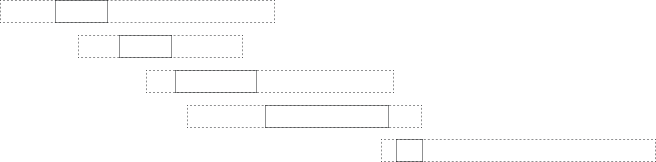
Momentum is created and preserved by reducing the size of commitments, not by endlessly scaling team sizes or putting pressure mid-development, this only makes late projects later and will decay code quality over time. Keep initiatives small enough to be completed by one to four people within one to three weeks, with a clear outcome and as few dependencies as possible. Smaller scopes forces everyone to think clearly about which features to actually prioritize.
Smaller scopes shorten feedback loops, expose mistaken assumptions early, and turn plans into observable progress. It makes changes easier to test, releases smaller to manage, and mistakes easier to fix.
By scoping down you will:
When work begins to stall, change the scope before adding time, people, or adjusting process. Preserve the essential outcome, remove everything that does not contribute directly to it, and deliver the smallest complete step that moves the team forward. Momentum compounds when finishing becomes a habit. Over time your team will begin to have an execution bias and prioritize deliviring value above all else.
The proof of concept is basically a "minimal viable prototype" A prototype of what can be, to prove the concept, before spending months working on it. Validate technical assumptions, test architecture choices. Explore novelty
It does not mean fully automated processes, most of the steps can be and should be manual. Copying database files, copy pasting e-mail addresses to an external solution, all good and should happen in the proof of concept phase.
The code in this part should not be reusable, it can turn out to be, but its not a goal yet.
Minimal viable product
Comercially viable product